
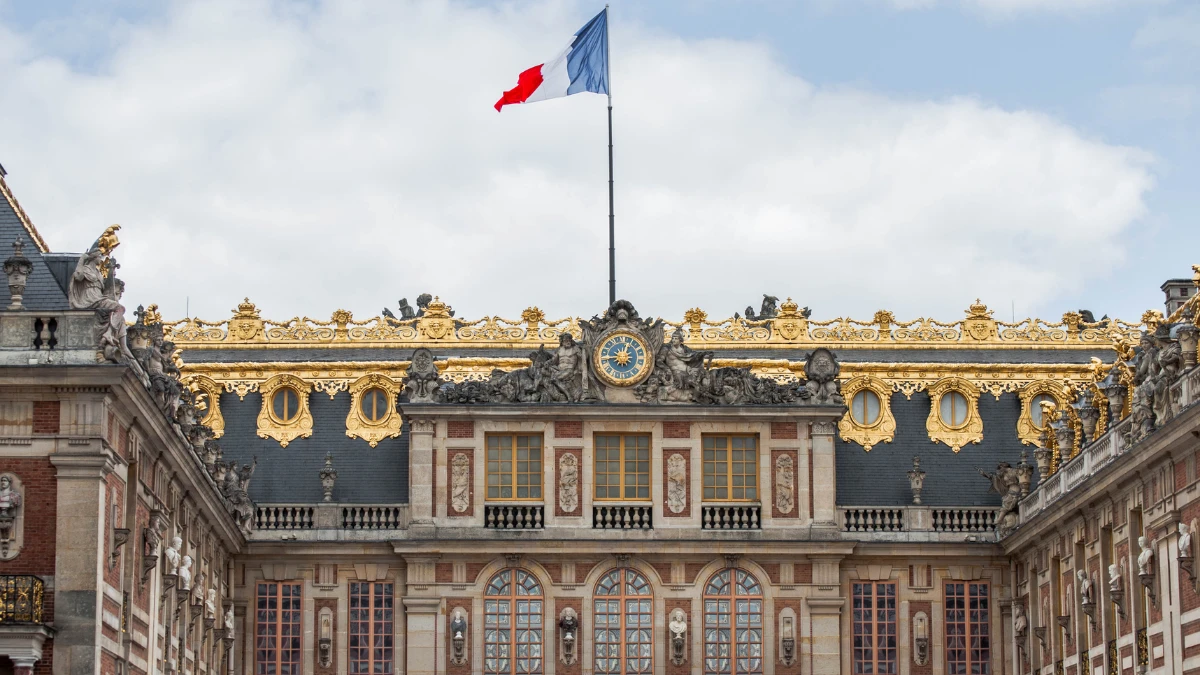
The Palace of Versailles (Château de Versailles) is a UNESCO World Heritage Site located 20 km southwest of Paris. Built by Louis XIV, the Sun King, from 1661 onwards, it served as the seat of French royal power until the Revolution in 1789. Today it receives over 8 million visitors a year. Key highlights include the Hall of Mirrors, the King’s and Queen’s State Apartments, the Royal Chapel, the formal Gardens, and the Trianon Estate. Entry starts from €21; the Full Access Ticket (€32) covers everything.
The Palace of Versailles is one of the greatest achievements of European royal architecture — a palace, a museum, and a garden all rolled into one extraordinary estate. Louis XIV transformed a modest hunting lodge into the most powerful royal residence in the world, and for over a century Versailles set the standard for European court life. Today, exploring it is one of the great travel experiences in France. This guide covers everything you need to know — what to see, how to get in, which ticket to buy, and how to make the most of your time.
Top Tickets
Table of Contents
Quick Facts: Palace of Versailles
| Detail | Information |
| Full name | Château de Versailles (Palace of Versailles) |
| Location | Place d’Armes, 78000 Versailles — 20 km southwest of Paris |
| Built | 1661–1710 (main palace and chapel); gardens from 1661 |
| Commissioned by | King Louis XIV (the Sun King) |
| UNESCO status | World Heritage Site since 1979 |
| Annual visitors | Over 8 million |
| Rooms | Approx. 2,300 total; select rooms open to public |
| Estate size | 800 hectares (approx. 2,000 acres) |
| Opening hours | Tue–Sun, 9 am – 6:30 pm (Apr–Oct); 9 am – 5:30 pm (Nov–Mar) |
| Closed | Every Monday; 1 May, 25 Dec, 1 Jan |
| Entry (Full Access) | €32 (includes palace, gardens, Trianon Estate) |
A Brief History of Versailles
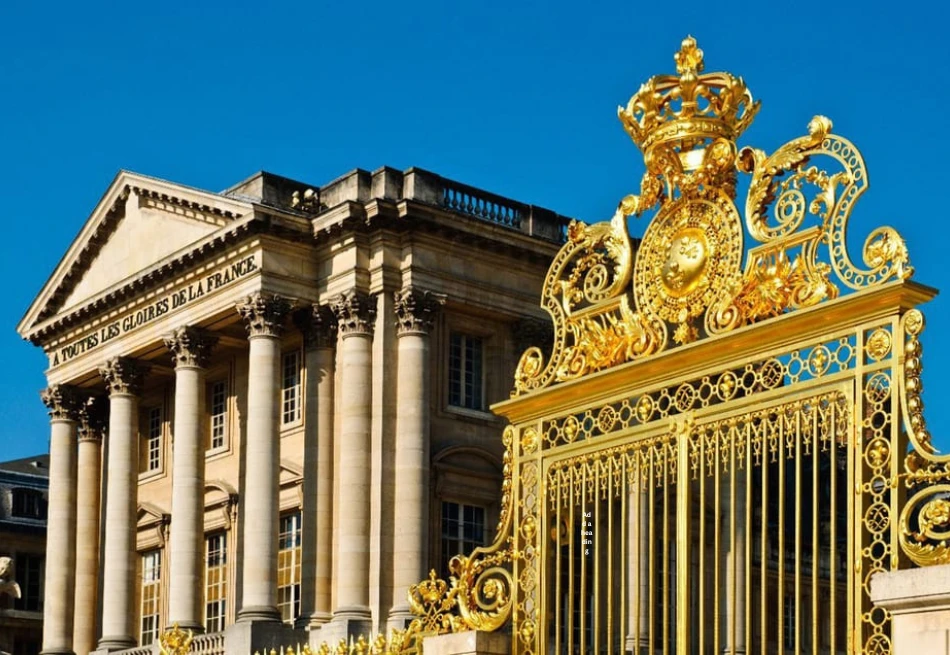
Versailles began as a modest hunting lodge built by Louis XIII in 1623. His son, Louis XIV, transformed it into the grandest palace in Europe, relocating the French court here in 1682. The palace served as the seat of royal power for over a century, until the French Revolution forced Louis XVI and Marie Antoinette to abandon Versailles and return to Paris in 1789.
The palace was subsequently converted into the Museum of the History of France by King Louis-Philippe in 1837 — a role it still serves today alongside its function as an active cultural venue. The Treaty of Versailles, which formally ended World War I, was signed in the Hall of Mirrors in 1919, cementing Versailles’ place in world history.
What to See Inside the Palace
Hall of Mirrors
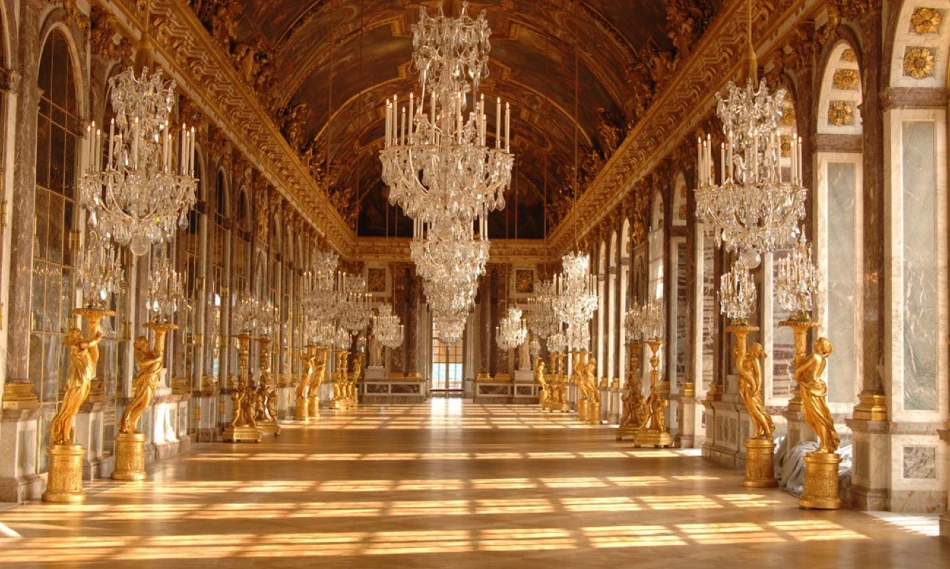
The Hall of Mirrors is the undisputed centrepiece of Versailles and the most photographed room in France. Stretching 73 metres along the garden-facing wall of the palace, this gallery features 357 mirrors set into 17 arched windows, ceiling paintings celebrating French military victories, and gilded chandeliers. Built between 1678 and 1684 by architect Jules Hardouin-Mansart, it was the setting for the signing of the Treaty of Versailles in 1919. Visit early in the morning for the best light and the smallest crowds.
King’s and Queen’s State Apartments
The State Apartments are seven ceremonial rooms that run along either side of the Hall of Mirrors. Each of the King’s rooms is named after a Roman god — Hercules, Venus, Diana, Mars, Mercury, Apollo, and the War Room. The Queen’s Apartments run parallel, culminating in the extraordinary Queen’s Bedchamber where royal births took place in public before the entire court. Marie Antoinette’s private apartments, hidden behind wood panels, are also accessible.
Royal Chapel
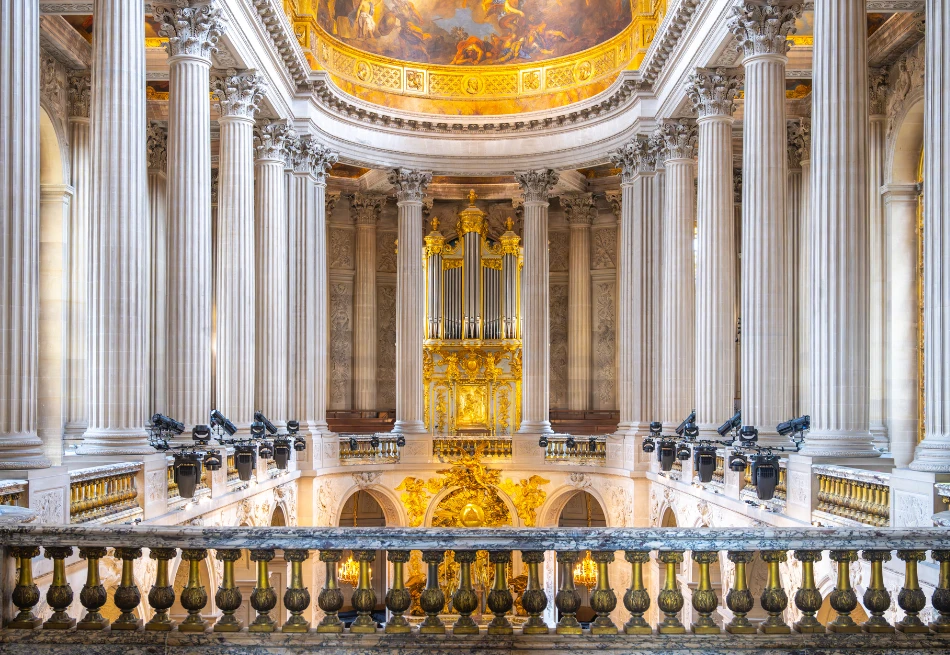
The Royal Chapel was the last great building project of Louis XIV’s reign, completed in 1710. With its soaring vaulted ceiling, baroque frescoes, golden organ, and colonnaded galleries, it is architecturally one of the most remarkable spaces in the entire estate. Royal weddings and baptisms were held here, and daily mass was attended by the entire court. Allow around 30 minutes.
Gallery of Great Battles
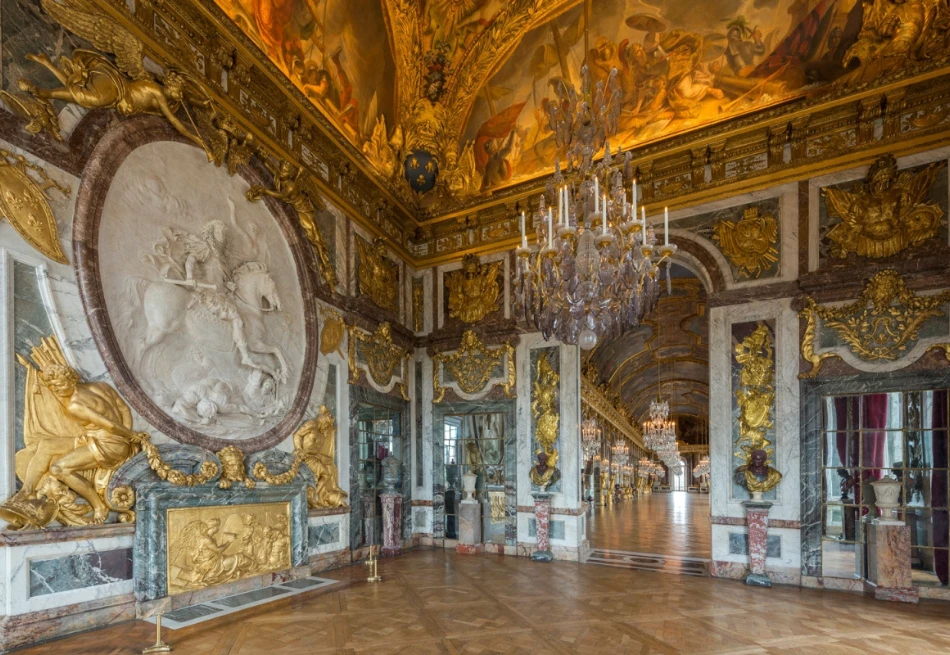
The Gallery of Great Battles runs almost the entire length of the South Wing — 120 metres long and 13 metres wide. Commissioned by King Louis-Philippe in the 1830s, it houses 33 enormous paintings celebrating French military victories from the time of Clovis to Napoleon. One of the most dramatic spaces in the palace, and far quieter than the main apartment route.
Museum of the History of France
Established in 1837, the Museum of the History of France occupies the ground floor and includes the Crusades Rooms, the Coronation Room, the Empire Rooms (covering the Napoleonic era), and the Africa and Crimea Rooms. It attracts around one million visitors a year and is included in standard palace entry.
Royal Opera
The Royal Opera was inaugurated in 1770 for the marriage of the future Louis XVI to Marie Antoinette. One of Europe’s finest 18th-century concert halls, it occasionally hosts classical concerts and ballet performances today — check the Versailles spectacles programme for upcoming events.
What to See Outside: Gardens, Park and Trianon Estate
The Gardens of Versailles cover 800 hectares and are the most spectacular formal gardens in the world. Directly south and west of the palace, they feature the Apollo Fountain, the Latona Fountain, the Neptune Fountain, the Grand Canal, 13 ornamental groves, and over 400 sculptures. The gardens are free on most days; a €10 surcharge applies on Musical Fountains Show days.
Beyond the formal gardens lies the Park — wilder, quieter, and home to the Grand Canal where you can hire rowing boats. At the far end of the estate, the Trianon Estate includes the Grand Trianon, the Petit Trianon, and Marie Antoinette’s Hamlet — arguably the most atmospheric and personal part of the entire visit.
Tickets: Which One Should You Buy?
| Ticket | What’s Included | Price | Best For |
| Full Access Ticket | Palace, Gardens, Trianon Estate | €32 | Most visitors — covers everything |
| Skip-the-Line Guided Tour | Palace tour (90 min) + Gardens access + priority entry | From €63 | Those wanting expert context and fastest entry |
| Round-Trip Tour from Paris | Coach transport + palace + guided tour | From €69 | First-timers, families, those coming from Paris |
| Palace-only Ticket | Main palace only (no Trianon) | €21 | Very limited time; not recommended for most |
Not sure which ticket to choose? Read our full Versailles ticket comparison guide for a detailed breakdown with recommendations.
Book your Full Access Ticket or Skip-the-Line Guided Tour in advance — walk-up queues regularly exceed 60 minutes in peak season, and tickets can sell out on the busiest days.
How to Get to Versailles
From Paris, take the RER C train to Versailles Château – Rive Gauche (35–40 minutes, approx. €4.30). The station is a 10-minute walk from the palace. Taxis cost €35–€60 from central Paris. For a full breakdown of all transport options, see our guide to reaching Versailles from Paris.
When to Visit
The best time to visit Versailles is on a weekday morning — arrive by 8:45 am and head straight to the Hall of Mirrors. Wednesdays and Fridays are the least crowded days. The palace is closed every Monday. For a full crowd calendar and seasonal advice, see our best time to visit guide.
Insider Tips
- Book in advance — entry is not guaranteed without a pre-booked ticket
- Use Entrance B if you’ve booked a guided tour — it bypasses the main queue entirely
- Download the official Versailles app for an interactive map and audio guide content
- Allow a full day to see the palace, gardens, and Trianon Estate comfortably
- The Little Train (€9 return) is the easiest way to reach the Trianon Estate without the 25-minute walk
- Picnics are allowed at two designated areas in the Park: Swiss Ornamental Lake and Saint Antoine Plain
Frequently Added Questions
Here are some of the frequently asked questions about Chateau de Versailles.
How to visit Versailles Castle?
There are three popular ticketing options: entry tickets, guided tours, and small-group guided tours.
The Palace and Gardens entry ticket is the cheapest and most popular ticket.
If you want a local expert to guide you all through, the skip-the-line guided tour is the best option.
If you want a personalized experience, a small-group guided tour with Transport from Paris gives you the best experience.
Why is Versailles Palace so famous?
The Palace became popular when King Louis XIV moved his government and court to Versailles in 1682.
Since then, Versailles has played an important role in French history, witnessing historic events, including the signing of the Treaty of Versailles.
Can I visit the Versailles Estate for free?
Yes, you can visit the Versailles Estate for free on the first Sunday of each month from November to March.
This initiative provides complimentary access, enabling visitors to explore the historic site without any admission fee.
Does Versailles still smell today?
During the reign of the Louis family, Versailles was infamous for its waste disposal issues and poor hygiene.
However, it no longer has odor issues and is well-maintained on a regular basis.
How long does it take to visit the Palace of Versailles?
Plan around 2 to 3 hours for the palace itself. If you’re also visiting the gardens, allow 4 to 5 hours or make it a day trip from Paris.
Is the Hall of Mirrors open to all visitors?
Yes! The Hall of Mirrors is included in all standard Versailles tickets and is one of the palace’s most visited rooms.
Can I visit Versailles Palace without a guide?
Yes, you can explore on your own. However, audio guides or guided tours give you deeper insights into the rooms and history.
Are there any temporary exhibitions?
Yes, the palace hosts rotating art and history exhibitions throughout the year.
Is the Royal Opera still in use?
Yes! The Royal Opera House occasionally hosts classical concerts and ballet performances. Tickets are separate from general entry.
