
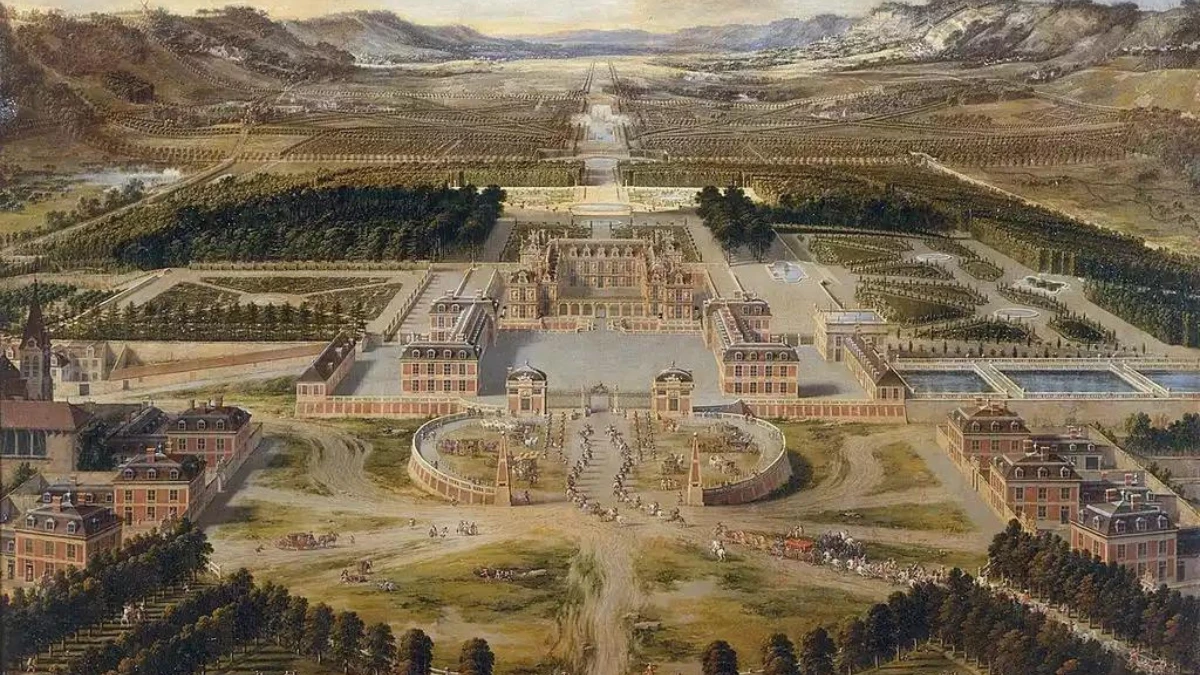
The Palace of Versailles began as a small hunting lodge built by Louis XIII in 1623. His son Louis XIV transformed it into the greatest royal palace in Europe, relocating the French court here in 1682. It served as the seat of French royal power until the Revolution of 1789. Converted into a public museum in 1837, it was designated a UNESCO World Heritage Site in 1979. The Treaty of Versailles — ending World War I — was signed in the Hall of Mirrors on 28 June 1919.
Few buildings in the world carry as much history as the Palace of Versailles. In just over three centuries, it has been a hunting lodge, the nerve centre of the most powerful monarchy in Europe, a revolutionary symbol, a diplomatic stage for some of history’s most significant treaties, and one of the world’s most visited museums. This is the story of how it came to be all of those things.
Top Tickets
Table of Contents
Versailles Timeline
| Year | Event |
| 1607 | The young Louis XIII visits Versailles for the first time, aged 5, on a hunting trip with his father Henry IV |
| 1623 | Louis XIII builds a small hunting lodge at Versailles |
| 1624–1634 | The lodge is expanded; first permanent structure on the site |
| 1661 | Louis XIV begins transforming Versailles into a great palace; André Le Nôtre starts designing the gardens |
| 1682 | Louis XIV moves the French royal court and government from Paris to Versailles |
| 1684 | Hall of Mirrors completed by Jules Hardouin-Mansart |
| 1687 | Grand Trianon completed as a private retreat for Louis XIV |
| 1710 | Royal Chapel completed — the last major building project of Louis XIV’s reign |
| 1715 | Louis XIV dies; Versailles briefly abandoned; Louis XV returns and completes ongoing projects |
| 1770 | Royal Opera inaugurated for the wedding of the future Louis XVI and Marie Antoinette |
| 1774 | Louis XVI gives the Petit Trianon to Marie Antoinette; she begins redecorating it entirely |
| 1783 | Treaty of Paris signed at Versailles; Britain recognises American independence |
| 1783–1786 | Queen’s Hamlet built for Marie Antoinette at the Trianon Estate |
| 1789 | French Revolution: revolutionary crowds storm the palace; Louis XVI and Marie Antoinette forced to return to Paris |
| 1837 | King Louis-Philippe converts Versailles into the Museum of French History |
| 1871 | Kaiser Wilhelm I proclaimed Emperor of Germany in the Hall of Mirrors following France’s defeat in the Franco-Prussian War |
| 1919 | Treaty of Versailles signed in the Hall of Mirrors, formally ending World War I |
| 1979 | Versailles designated a UNESCO World Heritage Site |
| 2003 | Extensive restoration programme begins, including the Hall of Mirrors |
| 2024– | Campus Versailles established to preserve and teach traditional palace craftmanship |
The Hunting Lodge: Louis XIII (1607–1643)
The future site of Versailles was first visited by the young Louis XIII in 1607, aged just five, on a hunting excursion with his father Henry IV. The area was thick with forests and marshland — ideal hunting country. Louis XIII fell in love with it as a child, and when he became king, he returned again and again. In 1623, he ordered a modest hunting lodge built on the site, which he used regularly from 1624. Between 1631 and 1634, the lodge was expanded into a small but proper chateau — the foundations of what would become the greatest palace in Europe.
Louis XIV and the Grand Vision (1661–1715)
Louis XIV — the Sun King — inherited the throne at the age of four in 1643 and effectively took personal control of France in 1661, following the death of his chief minister Cardinal Mazarin. Almost immediately, he turned his attention to Versailles, commissioning the architect Louis Le Vau, the garden designer André Le Nôtre, and the painter Charles Le Brun to transform his father’s modest chateau into a palace worthy of France’s greatest king.
The scale of the project was unprecedented. Tens of thousands of workers laboured for decades. Forests were planted, swamps drained, hills levelled, and an entirely new water supply system constructed — including an aqueduct — to feed the palace’s 50 fountains. The Hall of Mirrors was completed in 1684; the Royal Chapel in 1710; the Grand Trianon in 1687.
In 1682, Louis XIV made the decisive move: he relocated the French royal court and government from Paris to Versailles. This was both a practical and political choice. By gathering the nobility at Versailles and filling their days with court ritual, ceremony, and entertainment, Louis kept potential rivals occupied and under surveillance. The palace was not just a residence — it was an instrument of power.
Royal life at Versailles was entirely public. Even the most intimate daily routines — rising from bed, eating, preparing for sleep — were performed before an audience of courtiers as ceremonial events. Louis XIV understood that visibility was power. He was always watched, always performing, always the Sun King.
Louis XV and Louis XVI (1715–1789)
After Louis XIV’s death in 1715, the court briefly retreated to Paris, but returned to Versailles under Louis XV, who completed several of his great-grandfather’s unfinished projects and commissioned the Petit Trianon as a private retreat. Louis XV was a genuine lover of food and comfort — it was he who had a private kitchen installed in his apartments when he tired of cold meals.
His successor, Louis XVI, came to the throne in 1774 and almost immediately gave the Petit Trianon to his young wife, Marie Antoinette. She transformed it into an entirely personal space, redecorating the interiors in a lighter neoclassical style and commissioning the Queen’s Hamlet — a charming farm village where she could escape the pressures of court life.
But France was approaching financial collapse. Years of expensive wars and lavish court spending had drained the treasury. In 1789, the French Revolution erupted. In October of that year, revolutionary crowds marched from Paris to Versailles, forcing Louis XVI and Marie Antoinette to abandon the palace and return to the capital under escort. Both were later executed. The age of Versailles as a royal residence was over.
From Palace to Museum (1789–1870)
After the Revolution, Versailles was stripped of much of its furniture and art — many pieces were sold or destroyed. The palace stood largely empty for decades. In 1837, King Louis-Philippe made the decision that would save Versailles: he converted it into the Museum of the History of France, dedicating it to the glory of all eras of French history. The Gallery of Great Battles and the Coronation Room were created at this time, and many of the rooms were repurposed for historical displays.
The museum identity allowed Versailles to survive not just as a building, but as a living cultural institution. It has remained open to the public, in some form, ever since.
The Treaty of Versailles and the 20th Century
On 18 January 1871, following France’s defeat in the Franco-Prussian War, Kaiser Wilhelm I was proclaimed Emperor of Germany in the Hall of Mirrors — the most humiliating moment in modern French history, staged deliberately in France’s most celebrated room.
Nearly 50 years later, on 28 June 1919, the same room was chosen by France for Germany to sign the Treaty of Versailles, formally ending World War I. French Prime Minister Georges Clemenceau chose the location with full awareness of its symbolic weight — the Hall of Mirrors that had witnessed France’s humiliation now witnessed Germany’s. The treaty reshaped Europe and created the conditions for much of the 20th century’s history.
Versailles Today
Designated a UNESCO World Heritage Site in 1979, the Palace of Versailles today receives over 8 million visitors a year — making it the most visited historic monument in France and one of the most visited in the world. Major restoration programmes have been ongoing since 2003, including the complete renovation of the Hall of Mirrors. In 2024, a new Campus Versailles initiative was established to preserve and teach the traditional crafts involved in the palace’s construction and maintenance — gilding, fresco painting, stonecutting, ironwork — ensuring that these skills are not lost.
FAQs
Here are some of the frequently asked questions about the History of the Versailles Palace.
How old is the Palace of Versailles?
The Palace of Versailles is 400 years old.
Why is the Palace of Versailles important in history?
In 1682, under the reign of Louis XIV, Versailles became the main residence of the French court and government.
It was the center of political power in France and hosted many significant events, including the signing of the Treaty of Versailles, which ended World War I.
Was the Palace of Versailles destroyed?
During the French Revolution, people stormed the palace and forced the royal family to leave.
Many royal collections were destroyed or taken away. However, it was later turned into a public museum. Today, it is one of the world’s top tourist attractions.
